 Stock placeholder
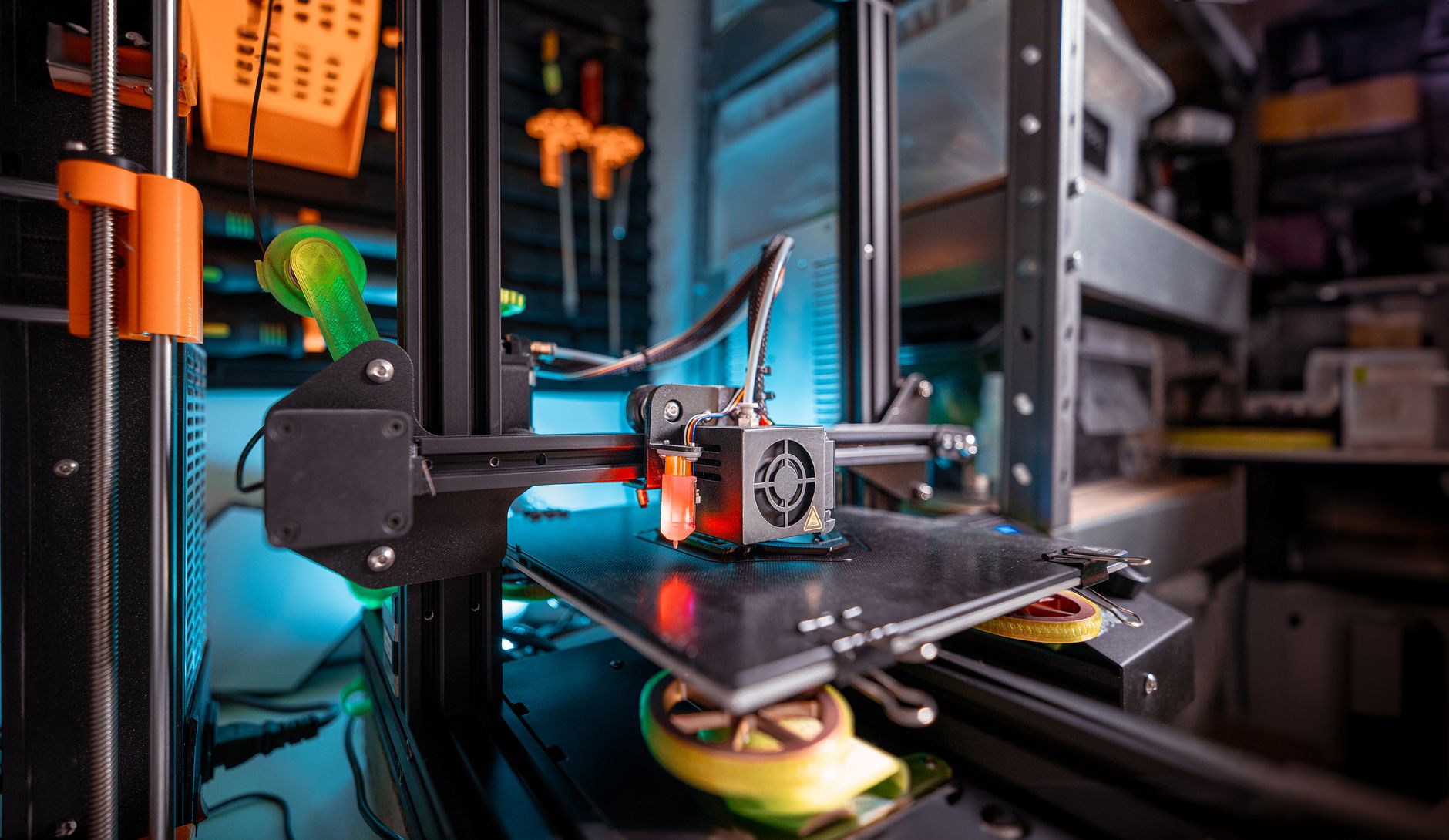
We model parts in 3D CAD and print them before anything gets cut, which is an unusual thing to find in a job shop and it saves material on the jobs where it matters.
The expensive version of a fabrication mistake is discovering it in steel. The cheap version is discovering it in a model, and the middle version is discovering it in a printed piece you can hold against the machine before committing material.
So on parts that are complicated, or expensive in material, or that have to fit into something we cannot bring into the shop, we model first. A printed check piece can be carried to your facility and offered up to the real assembly. If it does not fit, nothing has been lost except an afternoon.
The modeling also gives you something durable. Once a part exists as a model, the second one is not a second reverse engineering job, and a part that failed once and will fail again is much faster to replace the next time.
This sits alongside the metal work rather than replacing it. The printed piece is a step. The part we hand you is fabricated in aluminum, steel or stainless.
Send whatever you have. A drawing, a photograph of the broken part, a sketch on the back of a work order, or nothing but a description of what the thing has to do. Modeling is often the fastest way to turn the last of those into something that can actually be quoted and built.
How this job runs
The same sequence every time, so you know what you are buying.
The part drawn properly before it is built, including parts worked back from a broken original.
A physical piece you can offer up to the real assembly before we cut material.
Printed tooling that makes the metal part faster and more repeatable to build.
The finished part comes out of the shop in aluminum, steel or stainless.
Find the mistake on the screen, not in the steel.
Modeling is not a technology feature, it is a way of not paying for material twice.
| Situation | Model first? | Why |
|---|---|---|
| Simple bracket, cheap material | No | The modelling costs more than the remake risk |
| Expensive plate or alloy | Yes | A mistake in material is paid for twice |
| Has to fit equipment that cannot come to the shop | Yes | A printed check piece can be carried to the machine |
| You will need it again | Yes | The second one is not a second reverse engineering job |
| Complex geometry or several mating faces | Yes | Fit problems are found on screen rather than in steel |
What to send us
Everything you leave out becomes an assumption, and assumptions are what make an invoice differ from a quote. None of this has to be formal.
A drawing, a photo of the broken part, a sketch, or just a description of what it has to do.
Having the part exist as a model is genuinely useful the second time it is needed.
A sentence is enough to start. Precision comes later.
At your facility, or can it come to the shop.
Including any shutdown or outage window, and whether the date is fixed.
For anything that already exists, a photo does more than several paragraphs.
Questions about 3d cad modeling and 3d printing
Do you supply printed plastic parts as the finished product?
Printing is mainly used here for check pieces, fixtures and prototypes. The finished part is normally fabricated in metal.
Can you model a part that no longer has a drawing?
Yes, this is one of the most useful things about keeping CAD in a job shop. We can work back from the broken part.
Will I get the model?
Talk to us about it when you send the job. Having the part exist as a model is genuinely useful to you the second time it is needed.
Does this make the job slower?
On simple parts we skip it. On complicated or expensive ones it is usually faster overall, because it removes the remake.
Other things this shop does
Send us the job
Describe what you need made or fixed and we will send a quote back. Photographs and drawings help more than anything else, so the form takes uploads.
Commercial and industrial work. Residential is limited to handrails, gates and fences, and we do not take small repairs.